Saturday, January 10, 2015

Sad and horrible 2014 - Tengku Razaleigh Hamzah


 http://www.themalaysianinsider.com/mobile/sideviews/article/sad-and-horrible-2014-tengku-razaleigh-hamzah

Sad and horrible 2014 - Tengku Razaleigh Hamzah
January 01, 2015

It has been a sad and horrible 2014 for all Malaysians. The news, of economic trends, man-made (the two MH and the latest AirAsia airplane crashes, and the Cameron Highlands landslides) and natural disasters (the floods), and of political and ethnic relations setbacks, all made last year our annus horribilis.

Little wonder Malaysia, long tiring of being bogged down by negativities, is overdue for some positive and lifting news in 2015.

Doubtless we have made great strides since Independence. Our people are invariably better fed, more educated and on the whole more prosperous. But we are seemingly not that happy, much less satisfied. Relative to our potential as a people, goaded on by our very own diversity, many think we
can do more towards a new vision of development. And in comparison with our neighbours, we are some years behind some of them.

As we enter the New Year, we are reminded of how far we have deviated from the original path of economic, political and social development set by our founding fathers six decades ago. Some of the more serious developments, such as the increasing polarisation in race relations, the narrowing of perspectives on religion and religious practices long accepted, the many intractable and new imbalances and inequalities in our economy, and a politics that clouds the vision of a maturing democratic system, seem to have set everything back by a few decades.

We have to find solutions to our current economic troubles, whether these involve the negative impact of falling oil prices on government finances, or the rising cost of living and household indebtedness, or the profound social consequences of corruption, or inequalities in income and wealth in terms of access to proper housing, high-paying jobs, or helplessness of new poverty. We need to improve the quality of our health and education system and make better use of the public dollar.

We need to stabilise our political system by reaffirming the Federal Constitution, reform of how politics is funded, and clean up our electoral and party system so as to establish more consistent and fairer electoral outcomes in order to protect our emerging democracy. We need also to secure our borders, and guarantee the safety of our citizens at home, at work or on the streets.

To achieve a new deal for our nation and its people, we also need our systems of law and governance to be put right. With a determined leadership, I think these negative trends can and must be reversed.

Let us reset the economics, unchain the politics and release the common energy locked in our collective hearts diminished by everything that tries to differentiate us. Let us put all things right, and do the right thing by us, everyone of us: Malays, Chinese, Indians, Dayaks, Muruts, Kadazan Dusun,
Bidayuh, Orang Asal, Penan, all. And let us not leave anyone behind. Let us not envy the successful, but honour them; let us not let down the downtrodden, but lift them; and let us not succumb to disappointment, but give them hope.

I call on all Malaysians, of every colour, creed and religion, to caste aside our differences and come together as one true Malaysian people. Let us all pray to God for guidance and deliverance.

I would like to wish everyone, young and old, a Happy and Prosperous New Year. - January 1, 2015.

* Tengku Razaleigh Hamzah is Member of Parliament, Gua Musang.
____

Is free speech under attack?

mt2014-no-holds-barred
So this means there are boundaries and limits to free speech. And the government and/or society define these boundaries of free speech. And you are not allowed to cross this boundary or limit or else you will be condemned and/or punished.
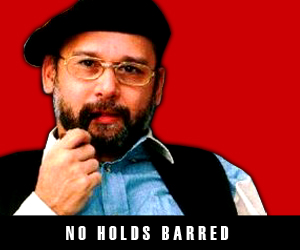
NO HOLDS BARRED
Raja Petra Kamarudin

The Charlie Hebdo attack in Paris has triggered a debate in the UK, France, Germany, and so on, regarding freedom of speech. Sky and BBC have called the Paris massacre an attack on free speech.
While the majority interviewed by Sky and BBC condemned the attacks as an example of Muslims being too sensitive and of not respecting or tolerating free speech, there are others who feel that the boundaries of free speech need to be defined.

As to whether the journalists and cartoonists of Charlie Hebdo crossed the line of free speech or not is a separate debate. As to the way they were punished is probably more of concern. Even if they did cross the line the punishment is way in excess of the ‘crime’.

In our modern, and hence we can also assume civilised society, violence can never be the response to however you may feel you have been hurt or insulted. Therefore the Paris massacre can never be justified however hurt or insulted you may feel.

The issue is: how far can we go in upholding free speech? Are there any limits or boundaries to free speech? Is the sky the limit to how far we are allowed to express what we feel?
In the outrage against the Paris massacre we will certainly focus on the violence and ignore the other and also important issue: where do we draw the line of free speech. Without trying to sound as if I support or am trying to justify the attacks — which I do not — we must not lose track of the fact that free speech does have its limits, even in Europe.

For example, I cannot wear a Nazi Swastika on my arm and say that I am just exercising my right of expressing my support of the Holocaust. I cannot even dispute the Holocaust and say that I doubt it happened and even if it did it is not possible that six million Jews were killed.
If I say this is sheer propaganda and a story fabricated with no evidence, I would be arrested in some countries and heavily condemned in others. Free speech does not extend to disputing the Holocaust or showing support for the Nazis.

Even if I use the anti-Islam or Prophet Muhammad cartoons as my justification to express my opinion regarding the Holocaust and the Nazis, this can never be accepted. I cannot argue that if you have the freedom to insult Islam then I, too, have the freedom to say what I want regarding the Holocaust and the Nazis.

So, Europe, too, sets a limit as to what you can and cannot say in expressing your opinion and in your exercising of free speech.

The question here is who defines these boundaries or limits? You set the boundaries and limits. I have no say in that decision. And I have to conduct myself according to those boundaries and limits that you have set and which I played no part in and never agreed to.
I can fly an Israeli flag outside my house. That is not a crime. But if I fly a banner that says ‘Israel is a terrorist state’ I would most likely get into trouble.

I will also get into trouble if I fly an IS (Islamic State) flag outside my house. But if I fly a banner that says ‘IS is a terrorist organisation and they should all be put to death’ that is not a problem.
Hence support for Israel is kosher. However, support for the enemies of Israel is haram. Do I have the freedom to express my opinion? Definitely not! You have to do the politically correct thing.
In Malaysia it is also the same. I can say that the Malays should not call the non-Malays pendatang because the Malays, too, migrated to Malaya from what is now called Indonesia. But if I say that if the Chinese and Indians are not happy then they can go back to China or India I would be condemned.

Who decided this boundary or limit? Why is it okay to whack the Malays but not the others? Who made the decision that it is kosher to whack the Malays but if you whack the others you are a racist?
The Muslims are allowed to say that the Bible is a fake and that the Christian doctrine, especially Catholicism, is heresy. Malaysian Muslims are allowed to call the Shias deviants who are not really Muslims. But if you say that the Qur’an is a fake and that Islam is actually a violent religion and not a religion of peace (and that is the reason for the Paris attacks) you will get arrested.

Kassim Ahmad has an opinion regarding the Hadith. And when he was asked his opinion and he gave it, they arrested him and put him on trial. So, Kassim Ahmad must go to jail because he has an opinion and because he expressed his opinion. Hence there is no freedom of opinion and freedom of speech after all.

So this means there are boundaries and limits to free speech. And the government and/or society define these boundaries of free speech. And you are not allowed to cross this boundary or limit or else you will be condemned and/or punished.

Hence the Paris attacks should be condemned. But they should be condemned because of the violence and deaths. These attacks, however, should not be treated as an attack on free speech because one man’s free speech is another man’s crime. To condemn the attacks as an attack on free speech is giving the impression that anything goes in the interest of free speech, and this is definitely not the case even in Europe.

http://www.malaysia-today.net/is-free-speech-under-attack/


Friday, January 9, 2015

Modi throws open doors to people of Indian origin around the globe


Indian Prime Minister Narendra Modi appealed to people of Indian origin to turn to their homeland in a bid to lure overseas talent.

Prime Minister Narendra Modi today appealed to millions of people of Indian origin across the world to turn to their homeland after he eased visa rules to lure overseas talent, in a bid to make the country a top power.

India has the world's second largest diaspora after China, with more than 25 million people settling overseas since colonial times, from Guyana in South America to Singapore in East Asia.

Modi's desire to harness the group's skills and resources is bolstered by his Hindu nationalist leanings towards reasserting India's position as a global leader with a unique civilisation stretching back thousands of years.

"There was a time when professionals in India went to distant lands to explore new possibilities," Modi told an annual gathering for people of Indian origin in the western state of Gujarat. "Now India awaits you with opportunities."

The diaspora event was timed immediately prior to a large investment meeting that will be addressed by US Secretary of State John Kerry and World Bank President Jim Yong Kim.

Yesterday, President Pranab Mukherjee approved an executive order to ease the way for those whose families left India as many as four generations ago, as well as their spouses, to get lifetime visas and own property in India.

Modi's pitch has a harder economic aspect too, as the diaspora holds investments of more than US$100 billion (RM357 billion) in India.

Young, foreign-educated Indians came back in droves at the turn of the millennium and poured in funds as the economy took off with a roar, but the flow has dried up as growth sputtered in the past few years. Modi is keen to reverse that trend.

Officials said they are also assisting citizenship efforts by those whose ancestors left India centuries ago, shipped by British rulers to distant corners of the globe as indentured labourers.

Last year, overseas Indians greeted Modi with a rockstar welcome and stadium rallies on his state visits to the United States and Australia.

The energetic leader's popularity has already won over some high-profile individuals, including Arvind Panagariya and Arvind Subramanian, two of the world's top economists, who recently joined his government after long careers in the United States.

The diaspora meeting was attended by Guyana's President Donald Ramotar, and also sought to tap into the French-speaking Indian diaspora from island nations such as Mauritius. – Reuters, January 8, 2015. –

Monday, January 5, 2015

Keliling dunia – Fudzail


Jet peribadi mewah eksklusif
sebagai kenderaan rasmi
membawa kami
keluarga perdana ke merata bumi
keliling dunia
urusan rasmi atau cuti
sebagai keistimewaan
kemudahan khas eksekutif
hak-hak yang termaktub
dalam persetujuan kabinet
yang tidak perlu dipertikaikan
oleh sesiapa sahaja
terutama mereka yang tidak
mengundi kami!

Jangan sekali ungkitkan
sama ada keistimewaan kami
wasatiyyah atau transformasi
mengikut perbelanjaan berhemah
dikala hutang negara menggunung
atau negara dilanda malapetaka
rakyat dalam musibah
itu bukan permaslahan
untuk menjadi umpatan
kerana privilege ini
lambang kemakmuran negara
sesuai untuk pemimpin
yang diiktiraf golf diplomasi
dengan Obama
pemimpin no1 dunia.

Ya! Rakyat harus berbangga
bersyukur dan berterima kasih
kepimpinan bertaraf global
telah membawa keuntungan
pulangan berbilion RM untuk 1MDB
di Cayman Islands
kerana itu memang berbaloi
untuk keliling dunia
rasmi atau bercuti
sendirian atau famili
menggunakan harta
dan dana rakyat! – 5 Januari, 2015.

* Ini adalah pendapat peribadi penulis dan tidak semestinya mewakili pandangan The Malaysian Insider.
- See more at: http://www.themalaysianinsider.com/rencana/article/keliling-dunia-fudzail#sthash.6WoPnoYO.dpuf

Monday, August 25, 2014

Legasi Tunku Dalam Politik

Menjelang sambutan ulang tahun kemerdekaan kali ke 57 banyak seruan-seruan dibuat bagi menimbulkan kemeriahan sambutan dan menaikan semangat patriotik. Orang ramai digalakan mengibarkan bendera sebagai tanda penglibatan dan patriotik. Upacara di pagi hari dengan perbarisan dan di malam hari dengan acara kesenian dan bunga api.
 
Ada beberapa sisi dalam sambutan ulang tahun kemerdekaan yang boleh dikembangkan atau ditonjolkan dengan lebih ketara lagi. Antaranya menghayati polisi-polisi atau tindakan-tindakan yang dibuat oleh pendiri atau pengasas kemerdekaan. Mereka inilah yang telah meletakan asas kukoh bagi membolehkan kemajuan dan kemakmuran Malaysia seperti yang dicapai sekarang. Dalam erti kata yang lain memahami dan menghayati legasi-legasi peninggalan mereka. Terutamanya legasi-legasi pandang ke hadapan yang membentuk Malaysia sehingga ke hari ini.
 
Sudah tentu tokoh utama yang perlu ditonjolkan ialah Tunku Abdul Rahman Putra sebagai Bapa Kemerdekaan. Legasi Tunku sebagai tokoh utama mendapatkan kemerdekaan sering ditonjolkan. Namun banyak lagi legasi-legasi Tunku yang lain perlu dihebahkan untuk mendapat pengiktirafan. Sehinggga ke hari ini setelah 57 tahun merdeka kita boleh lihat dengan jelas legasi Tunku yang masih hidup bahkan diperkembangkan mengikut peredaran masa.
 
Dari segi politik kejayaan Tunku membentuk Perikatan banyak diperkatakan. Konsep Perikatan kemudiannya dikembangkan oleh Tun Razak menjadi Barisan Nasional (BN). Satu konsep keluarga besar yang berlandaskan parti-parti mengikut kaum. Walaupun terdapat badai dalam mengharungi gagasan itu dengan cabaran-cabaran masa kini. BN masih lagi kekal memerintah Malaysia dan berjaya mengharungi Pilihan Raya Umum terkini pada 2013.
 
Suatu konsep muafakat politik dan pengkongsian kuasa antara kaum-kaum yang berada di Semenanjung, Sabah dan Serawak. Pakatan Rakyat (PR) sendiri menggunakan konsep muafakat politik dengan menunjukkan kejayaan. Terutamanya mereka telah berjaya mendapat undi popular melebihi daripada apa yang diperolehi oleh BN dalam Pilihan Raya Umum baru-baru ini.
 
Umumnya di Semenanjung dalam pembahagian kerusi, bagi kerusi yang pengundi majoritinya orang Cina akan diberikan kepada MCA. Kawasan pengundi bercampur diberikan kepada Gerakan atau MIC dan kawasan pengundi yang majoritinya Melayu diberikan kepada UMNO. Begitu juga PR kawasan-kawasan yang pengundinya majoriti orang Melayu diberikan kepada PAS. Kawasan yang bercampur diberikan kepada PKR dan majoriti Cina diberikan kepada DAP.
 
Legasi Tunku dalam membentuk keluarga besar dan perkongsian kuasa di terima oleh kedua-dua BN dan PR,
 
Selepas mencapai kemerdekaan Tunku tidak meniru apa yang dilakukan di Thailand dan Indonesia. Kedua Negara itu dalam membina negara bangsa telah mewajibkan seluruh penduduk mereka menggunakan bahasa kebangsaan, tulisan kebangsaan dan nama     Dengan demikian semua penduduk tidak mengira latar belakang telah diasimilasikan ke dalam budaya negara itu. Tunku memberi kebebasan kepada orang Cina dan Orang India terutamanya yang baru diterima sebagai warga negara meneruskan bahasa, tulisan dan nama mengikut identiti bangsa masing-masing. Asalkan mereka menerima bahasa Melayu sebagai bahasa Kebangsaan. Legasi inilah yang menjadikan masyarakat Malaysia satu masyarakat yang majmuk.
 
Legasi ini juga menolak pendapat yang sempit menonjolkan seolah-olah Malaysia hanya terdiri daripada satu bangsa sahaja.